NOT REALLY SOLVED!! R Pod 171 Shower Wont Drain!
Printed From: R-pod Owners Forum
Category: R-pod Discussion Forums
Forum Name: I need HELP!!!
Forum Discription: Perplexed/need help with a problem - ask here
URL: https://www.rpod-owners.com/forum_posts.asp?TID=16265
Printed Date: 23 Oct 2026 at 7:19am
Software Version: Web Wiz Forums 9.64 - http://www.webwizforums.com
Topic: NOT REALLY SOLVED!! R Pod 171 Shower Wont Drain!
Posted By: zachthecamper
Subject: NOT REALLY SOLVED!! R Pod 171 Shower Wont Drain!
Date Posted: 12 Aug 2025 at 12:14pm
|
Hey forum this is my first post so Hello! I am having this strange issue with my new to me camper. Its a 2020 R pod 171 so fairly new. I have moved into it full time so I am working thru all the kinks the previous owner never acknowledged. The current issue is the wet bath shower drain will only drain when the gray water tank valve is open to sewer. If its open I could shower for forever. If the gray tank drain valve is closed it backs up in a few minutes. Upon further investigation the kitchen sink is on its own piping to the gray water tank and it can drain fine with the gray water drain closed. This means the sink is not having issues with venting or a vacuum lock. Now for the shower I am trying to locate how the shower drain gets vented to the atmosphere to allow for draining when drain system is closed. I climbed on the roof and checked for a roof vent but only found one for the black water tank. It was also free of blockage. Does anyone know how the shower drain is vented to allow for draining? I need to find the vent and clear it of debris or something. Thank you!
|
Replies:
Posted By: JR
Date Posted: 14 Aug 2025 at 9:56am
|
Welcome to the forum and you are on the right track. I am not sure of the floor plan of your 171. I have a 2019 179 and the sink drain line is connected into the shower drain line on the passenger side of the trailer. Then the drain is piped to the other side of the trailer through the flooring. On the driver's side of the trailer the kitchen sink is connected to the one "common" drain line to the gray water tank, which has no venting. All drains have a P-traps to hold back the sewer gasses. Depending on how your drain lines are connected (you didn't mention if the bathroom sink has a problem draining also) you may just have a partial obstruction in the problem drain line. The obstruction could be as simple as being in the shower's p-trap. Be careful when trying to dislodge any obstruction because the drain line joints will not tolerate a lot of pressure, it's all plastic piping. This is just my understaning and I hope it helps you. ------------- Jay 179/2019 |
Posted By: Yardlad
Date Posted: 19 Aug 2025 at 8:15pm
|
Hey Zachthecamper, That sounds frustrating AF. What is the status of the grey water tank, when the valve is closed? I assume empty. What happens if you plunge it? Can you hear it moving anywhere through the system? Drain scopes are less expensive than they used to be.. I dunno.. Good luck man! ------------- Husband, father, musician |
Posted By: zachthecamper
Date Posted: 22 Aug 2025 at 3:00pm
|
Hey guys thanks for the input! I have just been showering with the valve open but tonight I am going to try plunging it softly and see. From what I saw under the shower thru the wall vent was the bathroom sink gets plumbed into the shower drain with a Y and then fed back to the gray tank on the passenger side. Then the kitchen sink on the driver side has its own pipe to the gray tank as well. The driver and passenger side do not come to one pipe into the gray tank.
|
Posted By: zachthecamper
Date Posted: 25 Aug 2025 at 10:29am
|
Hey thread, and anyone finding this in the future with the same problem— It turned out to be a Once I removed the bad vent, everything drained super fast. I ordered a direct replacement for cheap (~$15): They’re also stocked at Home Depot / Lowe’s. For the 171, the AAV size is Worth noting: on the 171 there is only
Pictures are also at this location: https://postimg.cc/gallery/tCPY29d 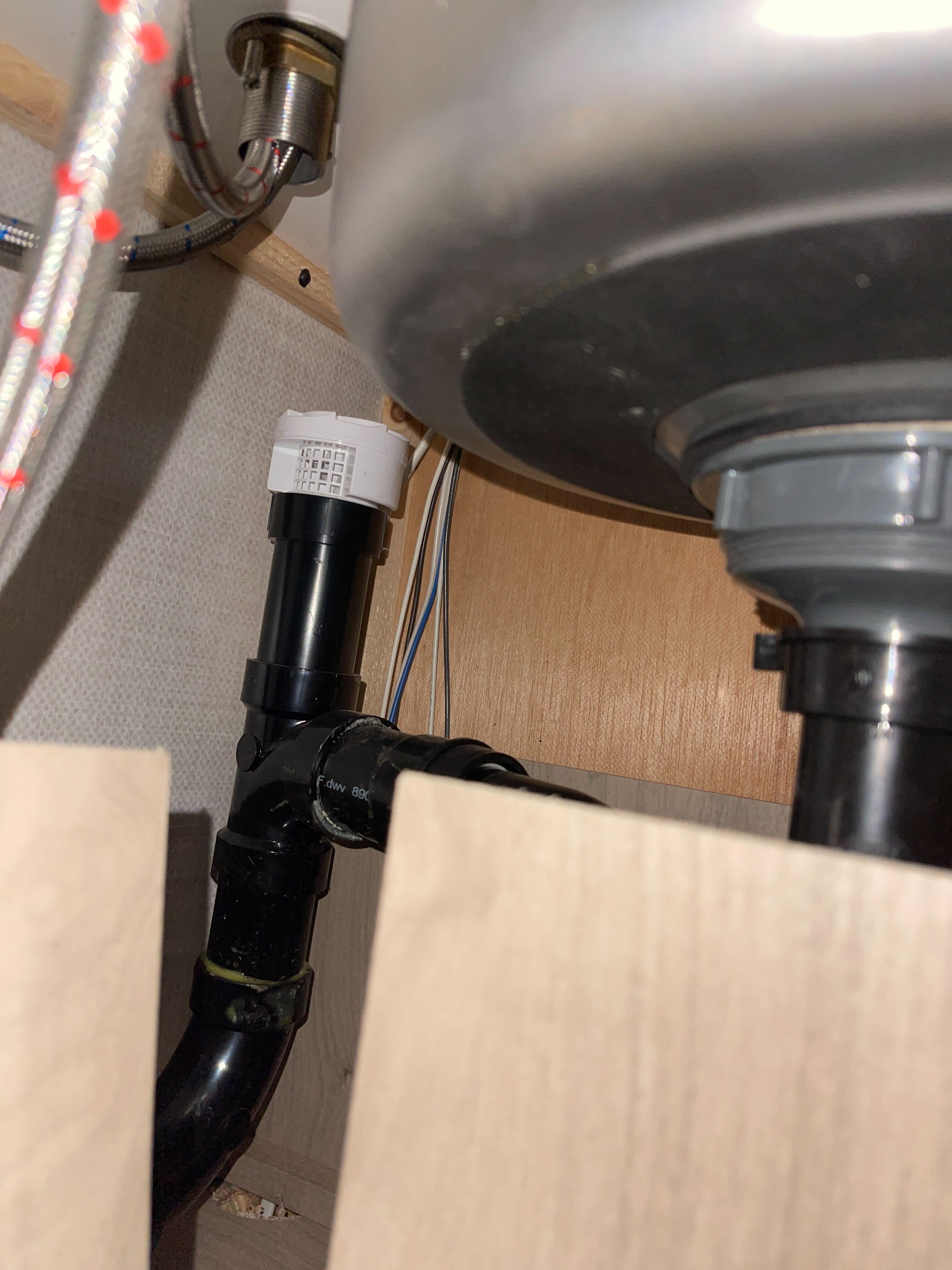 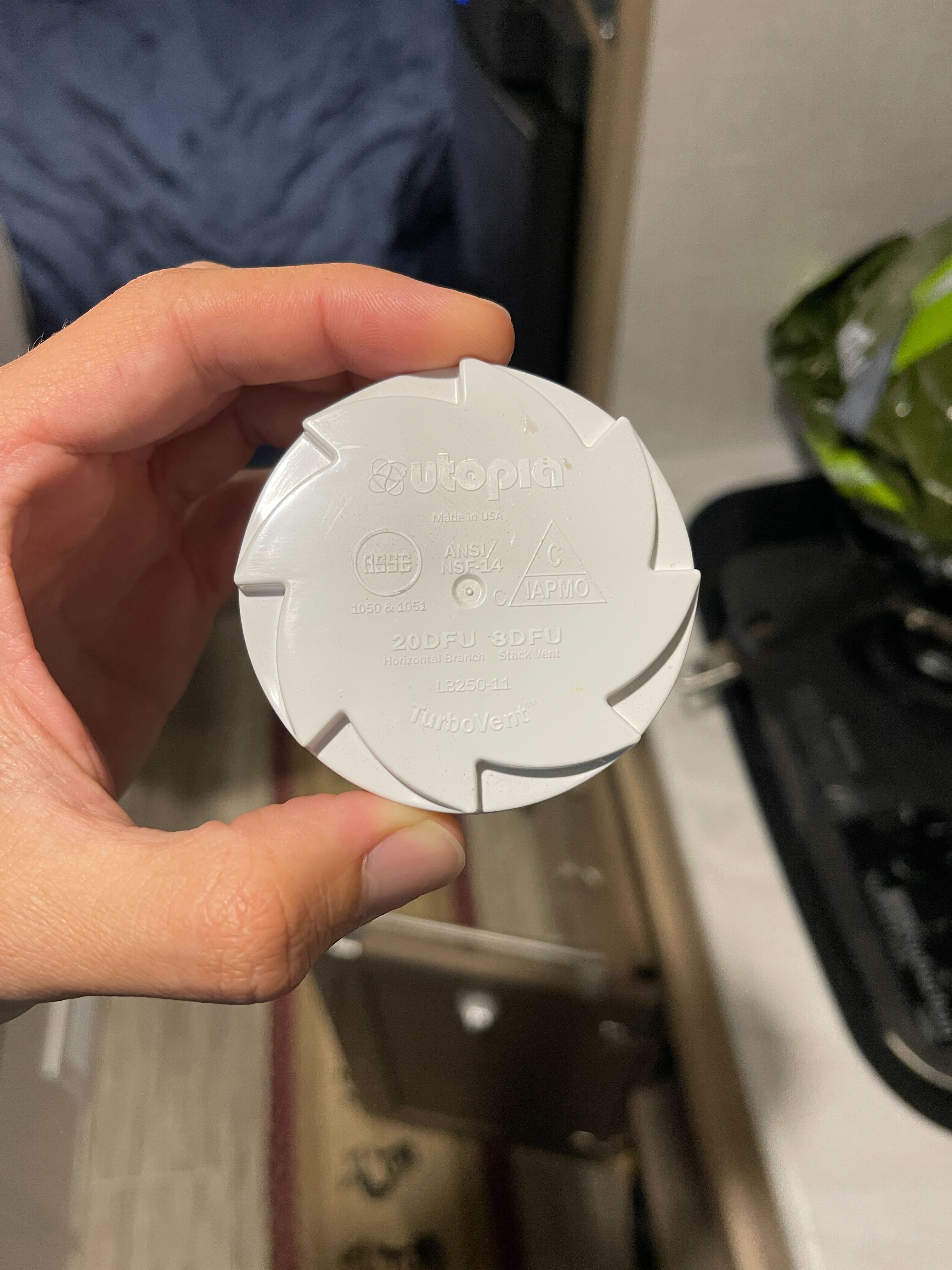 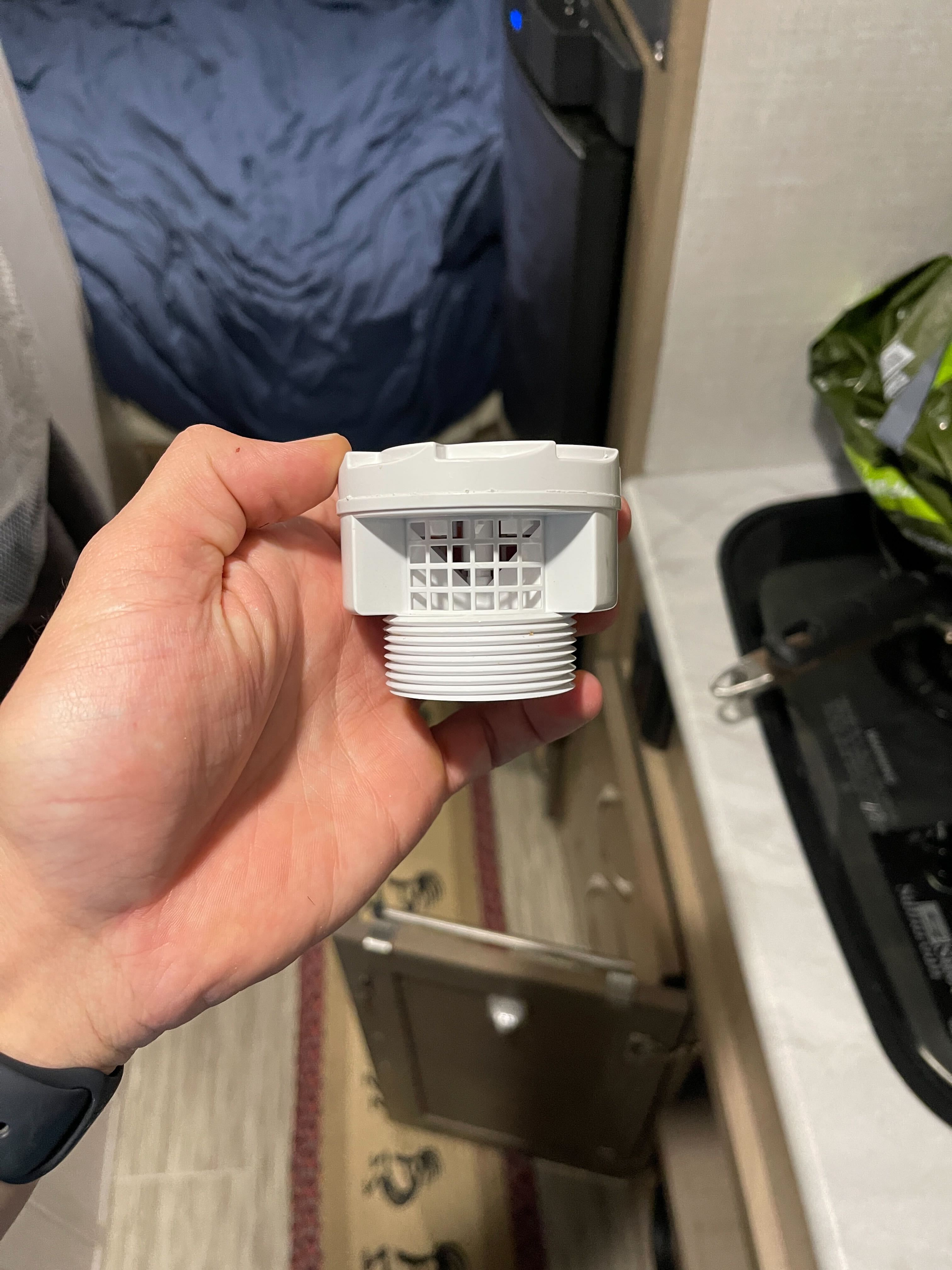 |
Posted By: JR
Date Posted: 25 Aug 2025 at 12:22pm
|
Glad you found it and were able to get it fixed. Thanks for sharing with everyone. That's something you don't come across very often. Now enjoy your shower!! ------------- Jay 179/2019 |
Posted By: poohbill
Date Posted: 25 Aug 2025 at 3:25pm
|
Huh. I don’t know if our ten year old Gastropod even has one. Thanks. ------------- 2016 179 Gastropod 2017 Ridgeline |
Posted By: zachthecamper
Date Posted: 07 Jan 2026 at 12:18am
|
Removing the vent did allow the system to drain, but once I installed the new vent, the exact same problem came back. I had the vent off for a few days while waiting on the part during a trip, so I thought the issue was solved. When the new vent went on and the problem returned, I never updated the thread. Hopefully no one has already gone down a rabbit hole because of that—sorry if so. Here’s the actual issue, which I currently have band-aided: The shower isn’t draining because R-Pod (or a previous owner) installed a Because of this layout, the kitchen plumbing on the driver side cannot breathe through the roof vent. The one-way waterless P-trap blocks positive air from traveling up to the vent. When water runs through the kitchen sink, the system becomes pressurized, which prevents the shower from draining. The only ways to break the vacuum are:
Neither is practical. Option one lets gray smells into the camper, and option two requires being hooked up to a drain—obviously not ideal when boondocking.
This would allow the gray tank to vent freely through the roof and give the kitchen plumbing a proper path to release positive pressure when draining. The key issue is that the mushroom vent’s job is to I also confirmed the roof vent itself is clear. I got on the roof, flushed it with a hose, and could feel air moving while running water. The vent is not obstructed. Typically, when you have two separate plumbing trees (driver and passenger sides), manufacturers use two roof vents. R-Pod chose to run both sides and the black tank into a single roof vent. Simpler, yes—but not effective in this configuration. So my big question is: If anyone with an R-Pod 171 could lift the small square plywood panel behind the bathroom and check how their wet bath P-trap is routed, that would be incredibly helpful. I’m open to the idea that I may be missing something, but based on everything I’ve researched, tested, and observed, it really seems like the waterless P-trap is simply installed in the wrong location for proper venting. |